
Showing posts with label loneliness. Show all posts
Showing posts with label loneliness. Show all posts


Art and Need


(Four Elements of Architecture, Gottfried Semper)
(pencil emphasis not by me)
"Art knows only one master - the need. It degenerates when it follows the whim of artists, even more so when it obeys the powerful patrons of art. Its proud determination can indeed raise a Babylon, a Persepolis, or a Palmyra from the desert sands, whose regular streets, mile-wide squares, stately halls and palaces impatiently wait in their sad emptiness the population that the despotic ruler was unable to conjure. The organic life of Greek art is not its work; it flourished only on the soil of need and under the sun of freedom."
(pencil emphasis not by me)
"Art knows only one master - the need. It degenerates when it follows the whim of artists, even more so when it obeys the powerful patrons of art. Its proud determination can indeed raise a Babylon, a Persepolis, or a Palmyra from the desert sands, whose regular streets, mile-wide squares, stately halls and palaces impatiently wait in their sad emptiness the population that the despotic ruler was unable to conjure. The organic life of Greek art is not its work; it flourished only on the soil of need and under the sun of freedom."
The dreams of the little shopgirls
 |
| The Mass Ornament, "The Little Shopgirls Go to the Movies", Siegfried Kracauer |
Is loneliness a constant?
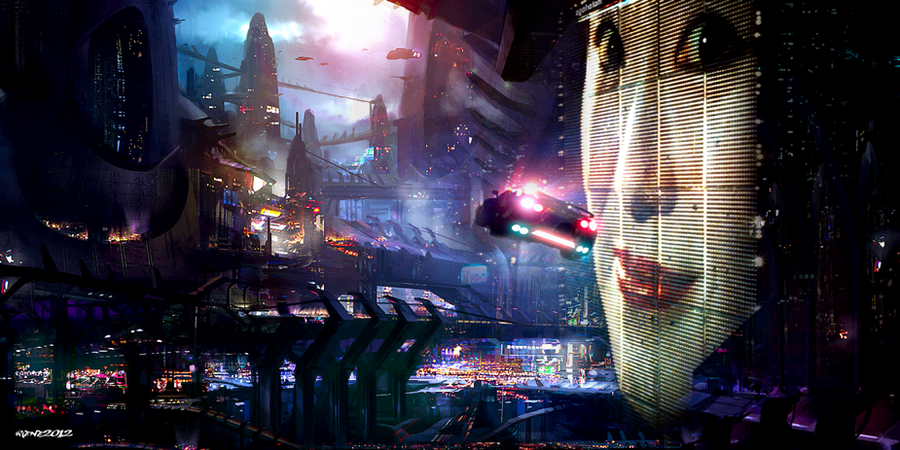
We can agree that if there is no loneliness, Blade Runner could not be made. (Is there any great movie that can be made in the absence of loneliness..?)
Yet, are there people who feel nothing for Blade Runner? Perhaps they would not notice if loneliness is not present? Perhaps they do not sense loneliness? Is it necessary?
What is architecture, what can it do if the canvas is loneliness?
Is there loneliness in a small town? Is there loneliness in a warm family?
Loneliness in a city full of people? Warmth in a city full of emptiness?
Why is a red balloon most red against a solid blue sky? "There is nothing redder in this world" - who said this..?

Is the loneliness of the high-rise the loneliness of the city?
We might think here of Paolo Virno’s distinction between the “multitude” and
“people.” The latter positions individuals in relationship to larger shared identities in which individuals recognize themselves and with which they see shared experience, while multitude (which Virno characterizes as the dominant tendency of the present) describes subjects incapable of recognizing themselves in social groupings or of imagining shared experiences. The individuals of the multitude are bound together as multitude by the recognition in one another of the shared experiences of alienation.
- Contemporary Ornament: The Return of the Symbolic Repressed by Robert Levit






Subscribe to:
Posts (Atom)